History
UNESCO, the pupi and the fight to keep Sicilian puppet theatre alive
How a nineteenth-century working-class art was proclaimed, inscribed and revived, with the dates that UNESCO and Wikipedia give.
Book the puppets ↗Quick answer
UNESCO says the Opera dei Pupi arose in Sicily in the early 1800s and drew the working classes. It was first proclaimed in 2001 and entered on UNESCO's register of intangible heritage in 2008. Wikipedia records crises in the late nineteenth century, the 1930s and the 1950s and 1960s, and describes a revival with companies still performing today.
How the tradition began
UNESCO says the theatre arose in Sicily in the early 1800s and was a favourite of the island's working classes. Wikipedia places its start in the third decade of the nineteenth century and names Gaetano Greco and Liberato Canino as initiators in Palermo, and Gaetano Crimi and Giovanni Grasso in Catania. The two accounts differ only in how precisely they date the start.
What the plays were about
According to UNESCO, the stories drew on medieval chivalric literature, Italian Renaissance poems, the lives of saints and tales of notorious bandits. Wikipedia adds Shakespeare adaptations and short farces to the repertoire. The mix explains the audience: a working-class crowd that wanted epic stories, local heroes and comedy in one evening.
Proclaimed and inscribed
UNESCO's page says the Opera dei Pupi went onto its register of intangible heritage in 2008, after an original proclamation in 2001. Wikipedia says the 2001 step carried UNESCO's Masterpiece label. The listing protects a living practice and its makers, not a building, which is why the puppets and the people who work them matter more to it than any single theatre.
Decline and revival
Wikipedia notes that Giuseppe Pitrè recorded the decline in the late nineteenth century, and that further crises came in the 1930s with the rise of cinema and in the 1950s and 1960s as popular neighbourhoods emptied and consumer culture spread. It also describes renewed vitality and new audiences, and says companies still perform today.
Families and museums
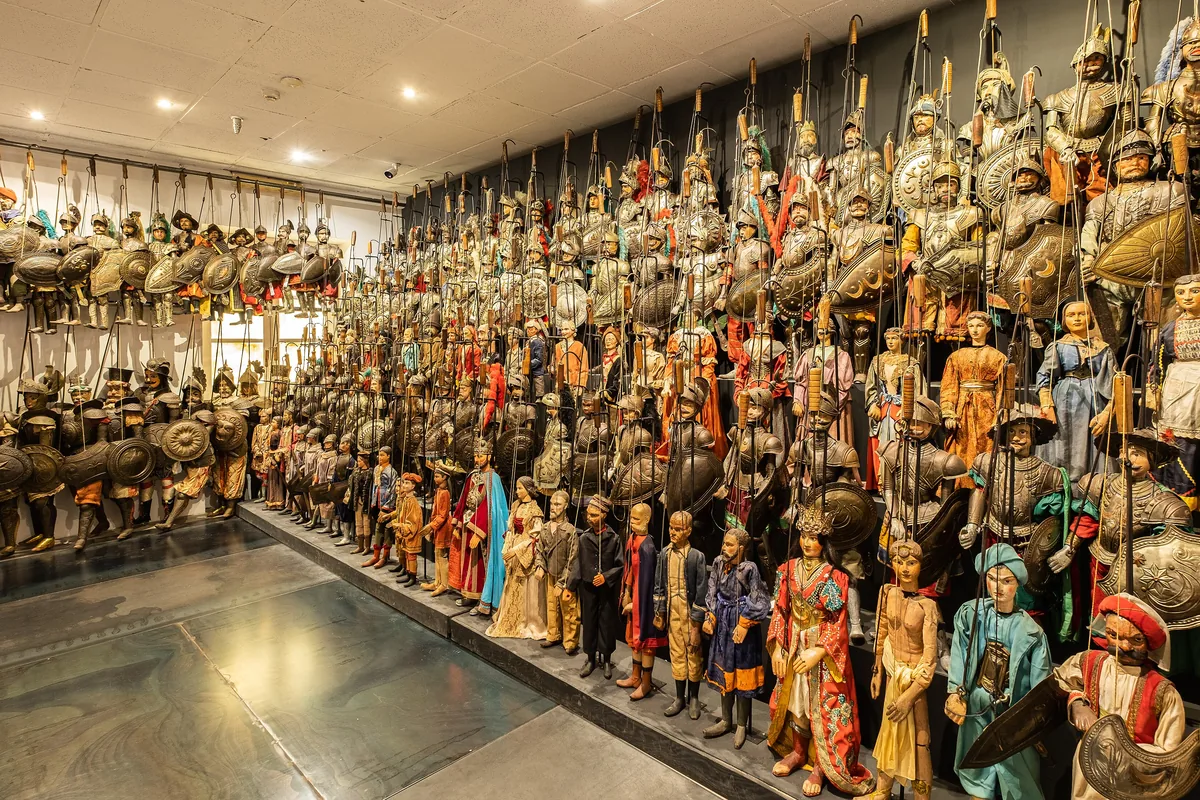
Wikipedia names the Cuticchio companies among those performing in Palermo, with the Giacomo Cuticchio Senior Collection at Palazzo Branciforte. The Pasqualino puppet museum, founded in 1975, holds over 5,000 items, per Wikipedia, and the association behind it was set up in 1965 by Antonio Pasqualino. Between companies and museums, the craft is documented and still practised.
Why it matters for a visit
A listing does not guarantee a show's quality, but it does explain why an hour of puppets in Palermo is more than a novelty. You are seeing a practice that has survived crises, and that visitors help to keep alive. A ticket to a performance is one of the ways such a tradition is funded, which is a fair reason to choose a live show over a photograph of one. Wikipedia's account of the revival suggests that audiences, and not only museums, keep a craft like this in work.
Who this guide is not for
If you want advice on booking, the first guide covers that. This one is background: dates and names from UNESCO and Wikipedia, with no claim about any single company or theatre.
Frequently asked questions
When did UNESCO list the Opera dei Pupi?
Inscribed in 2008, originally proclaimed in 2001, says UNESCO.
Who started the Palermo tradition?
Wikipedia names Gaetano Greco and Liberato Canino among the initiators in Palermo.
Is the tradition still alive?
Wikipedia says companies still perform today and describes renewed vitality.
Sources