The craft
Palermo and Catania puppets: how the two Sicilian schools differ
Size, weight, knees, swords and stage shape: what separates the Palermo school of pupi from the Catania school, according to UNESCO and Wikipedia.
Book the puppets ↗Quick answer
UNESCO says the two schools differ mainly in how big the puppets are and what shape they take, plus operating technique and backdrops. Wikipedia adds detail: Palermo puppets are about 90 cm and 5 to 10 kg with articulated knees, while Catania puppets run 110 to 130 cm and up to about 30 kg with stiff legs. Palermo puppeteers work from the wings at stage level; Catania puppeteers work from a raised bridge behind the backdrop.
One tradition, two schools
UNESCO says the Palermo and Catania schools differ mainly in the size and shape of their puppets, with different operating techniques and brightly painted backdrops. The stories are the same: the cycle of Charlemagne and his paladins. What changes is the body of the figure and the way it is worked. Knowing which school you are watching tells you what to expect from a duel.
Size and weight
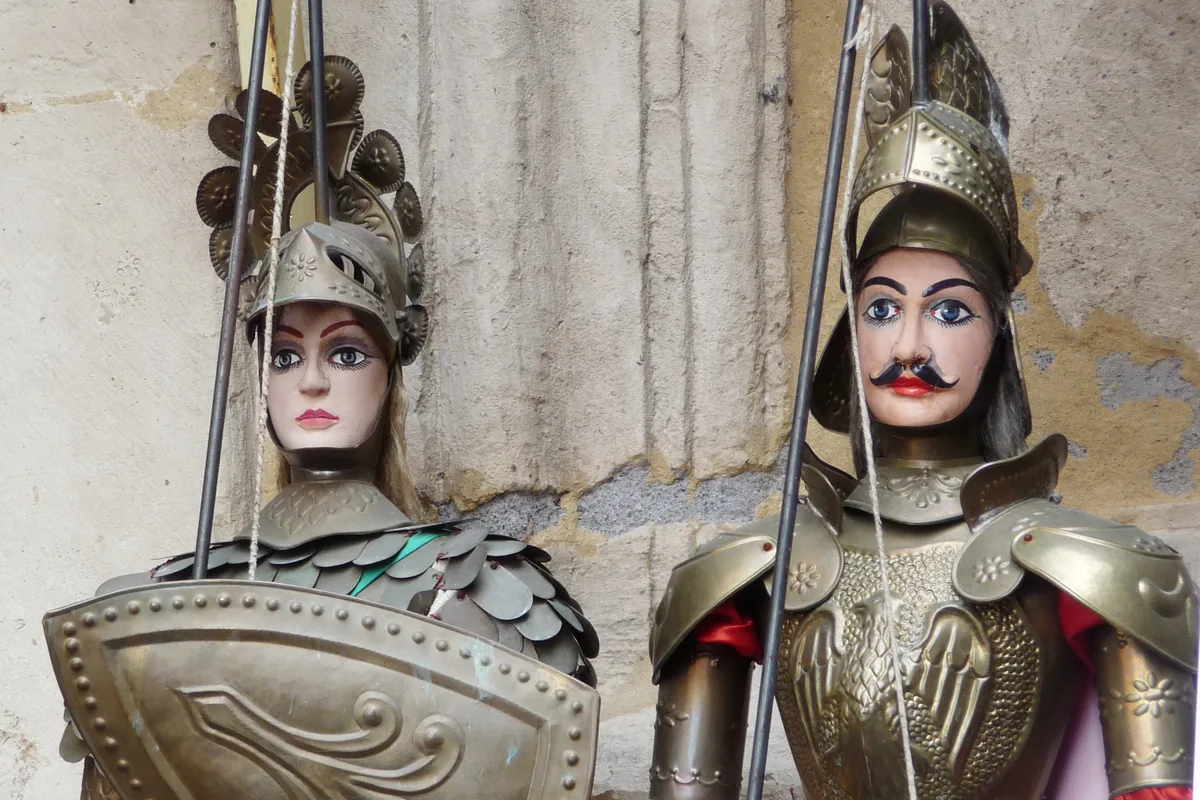
Wikipedia gives Palermo puppets as about 90 cm tall and weighing 5 to 10 kg. Catania puppets are larger, from 110 to 130 cm, and can weigh up to about 30 kg. A heavier puppet moves with more gravity and fewer fast turns, while a lighter one can skip and spin. If you see a pupo that looks nimble in a duel, it is more likely to belong to the Palermo type.
Knees and legs
Palermo legs have articulated knees. Catania legs are not articulated, which Wikipedia says helps them bear weight on stage. The practical result is that a Palermo knight can bend, kneel and step with some fluency, while a Catania knight strides stiffly and strikes poses. Neither is better, but they feel different, and the difference can be seen in the first minute.
Swords and rods
In Palermo, says Wikipedia, swords are drawn and sheathed by a wire through the right hand. In Catania the warrior holds the sword in the right hand without that wire. That one detail changes how a fight is staged: the Palermo puppet's sword work can be quick and precise, while the Catania puppet's is more deliberate.
The stage and the puppeteer
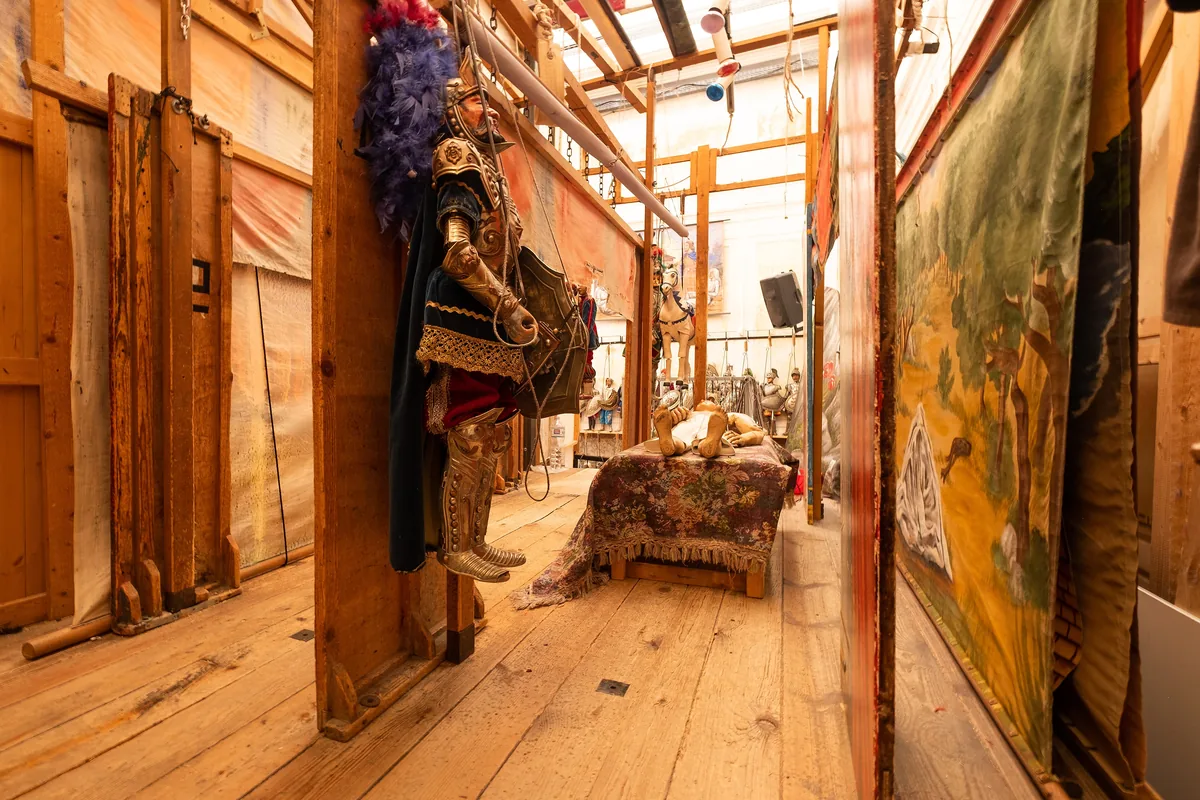
Wikipedia says Palermo puppeteers work from the wings at stage level, so the stage is deeper than it is wide. Catania puppeteers work from a bridge raised behind the scenery, which makes that stage wider than deep. The result is a different shape of picture: Palermo shows have depth and entrances from the sides, while Catania shows run across a wide frame.
Music and the comic figures
Wikipedia says Palermo shows used violins for music, later replaced by the barrel organ, while Catania used plucked instruments and sometimes an accordion. The comic figure in Palermo is Nofrio, alongside Virticchio; in Catania it is Peppininu. If a show you see has a particular clown, that is a clue to the school it belongs to.
Where you can see both
Wikipedia says the Pasqualino puppet museum in Palermo, founded in 1975, keeps the largest and most complete collection of pupi of the Palermo, Catania and Neapolitan types, with full materials from three theatres. Seeing the two schools side by side makes the differences obvious, and it explains why a Palermo puppet in a Palermo theatre looks lighter than a Catania one.
Who this guide is not for
If you only want to enjoy the show, you can skip the details: the plot works without them. The differences matter to visitors who like craft and want to know why the puppet in front of them moves as it does. The size and weight figures come from Wikipedia and are typical values; individual puppets and companies vary.
Frequently asked questions
How tall is a Palermo puppet?
About 90 cm and 5 to 10 kg, says Wikipedia. Catania puppets run 110 to 130 cm and up to about 30 kg.
What does UNESCO say about the schools?
That they differ principally in the size and shape of the puppets, along with their operating techniques and backdrops.
Which school will I see in Palermo?
The Palermo school is the local one, but companies vary, so the confirmation and the guide will say what you are watching.
Sources
- UNESCO intangible heritage entry for the Sicilian puppet theatre
- Encyclopedia entry on the Opera dei Pupi
- Encyclopedia entry on the Pasqualino puppet museum in Palermo
- Italia.it: Museo internazionale delle marionette Antonio Pasqualino
- The booking page for the Opera dei Pupi performance in Palermo, on GetYourGuide